Stage vs. Screen Acting: Why Multan’s Theater Actors Need Camera Training


Multan has long been recognized as one of South Punjab’s cultural and artistic centers. The city’s theatre community has nurtured countless performers through stage productions, dramatic storytelling, and live performances. Many talented actors have built their confidence and artistic foundations by performing in local theatres, educational institutions, and cultural events.
However, today’s entertainment industry is rapidly evolving. Television dramas, feature films, OTT platforms, web series, commercials, and digital productions demand a different set of acting skills. While stage experience provides an excellent foundation, it does not automatically prepare an actor for the technical requirements of the camera.
If you are a theatre performer looking to work in television or film, understanding the difference between theater vs film acting is essential. This guide explains why professional camera training has become an important step for aspiring actors and why joining a screen acting academy in Multan can help bridge that transition.
Multan’s Strong Theatre Tradition
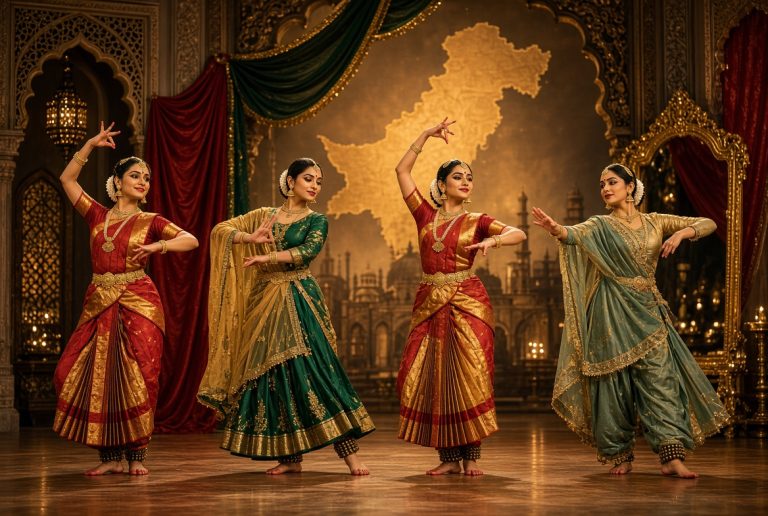
For decades, theatre has played an important role in the cultural identity of Multan. Local productions, community performances, educational institutions, and organizations such as the Multan Arts Council have provided valuable opportunities for performers to develop their craft and connect with audiences.
Stage acting teaches essential qualities such as:
- Voice projection
- Character development
- Emotional expression
- Memorization
- Live audience engagement
- Stage discipline
- Team collaboration
These skills create a strong artistic foundation that benefits every actor.
However, screen acting introduces technical challenges that cannot be fully learned on stage.
Why Stage Acting and Screen Acting Are Different
Many aspiring actors believe that performing well on stage automatically means they will perform well on camera.
In reality, the two disciplines require different techniques.
Stage Acting Is Designed for Live Audiences
In theatre, actors must communicate with audiences seated throughout the venue.
This often requires:
- Larger body movements
- Strong vocal projection
- More expressive gestures
- Broad facial expressions
These techniques help emotions reach viewers sitting far from the stage.
Screen Acting Is Designed for the Camera
A camera captures even the smallest details.
Tiny facial movements, subtle eye expressions, and natural reactions become highly visible on screen.
Instead of projecting emotions outward, screen actors learn to communicate through authenticity and emotional truth.
This is why many experienced theatre actors initially struggle during television or film auditions.
The Biggest Challenge: Learning to Trust the Camera
One of the most common adjustments for stage actors is reducing unnecessary movement.
The camera rewards subtle performances.
Rather than exaggerating emotions, actors must learn to:
- Think before reacting
- Listen naturally
- Control body language
- Maintain emotional continuity
- Perform truthfully within the frame
Professional camera training helps actors develop these habits through guided practice and recorded performance reviews.
Five Skills Every Theatre Actor Needs Before Working on Camera
1. Camera Awareness
Unlike stage performances, actors must understand:
- Camera positions
- Framing
- Focus marks
- Shot composition
Knowing where the camera is positioned helps actors deliver consistent performances without breaking the visual composition.
2. Eyeline Control
Maintaining correct eyelines creates believable conversations between characters.
Looking at the wrong point—even briefly—can reduce the realism of a scene.
Learning proper eyeline technique is a fundamental part of professional screen acting.
3. Continuity
Film scenes are rarely shot in sequence.
Actors may perform the same scene multiple times from different camera angles.
Maintaining consistent gestures, emotional intensity, posture, and movement allows editors to create seamless scenes.
This technical discipline is rarely required in live theatre but is essential for film and television.
4. Natural Performance
Many theatre actors initially carry stage habits into screen performances.
Professional camera acting encourages actors to:
- Reduce exaggerated expressions
- Minimize unnecessary gestures
- Deliver dialogue conversationally
- Focus on genuine emotional responses
Natural performances often create stronger emotional connections with audiences.
5. Understanding Different Camera Shots
Every camera shot requires a slightly different approach.
Close-Up
The camera focuses on facial expressions.
Subtle emotions become the primary storytelling tool.
Medium Shot
Actors balance facial performance with body language.
Wide Shot
Movement, posture, and blocking become more important.
Understanding these differences allows actors to adapt confidently during professional productions.
Why Camera Training Matters More Than Ever
Pakistan’s entertainment industry continues to expand beyond traditional television.
Actors now have opportunities in:
- Television dramas
- Feature films
- Short films
- Web series
- Digital platforms
- Streaming productions
- Brand commercials
- Social media campaigns
Most of these productions require actors who understand both performance and camera technique.
Practical camera training helps performers become comfortable working in professional production environments.
How Stage Actors Can Successfully Transition to Screen Acting
The good news is that theatre actors already possess many qualities needed for success.
The next step is learning how to adapt those strengths for the camera.
A structured training program can help actors:
- Build camera confidence
- Improve audition performance
- Learn technical screen acting
- Understand professional filming environments
- Practice with recorded scenes
- Receive constructive feedback from experienced mentors
This transition allows performers to expand their opportunities without abandoning their theatrical foundation.
Why Choose a Screen Acting Academy in Multan?
Learning camera acting in a structured environment provides practical experience that self-study often cannot replicate.
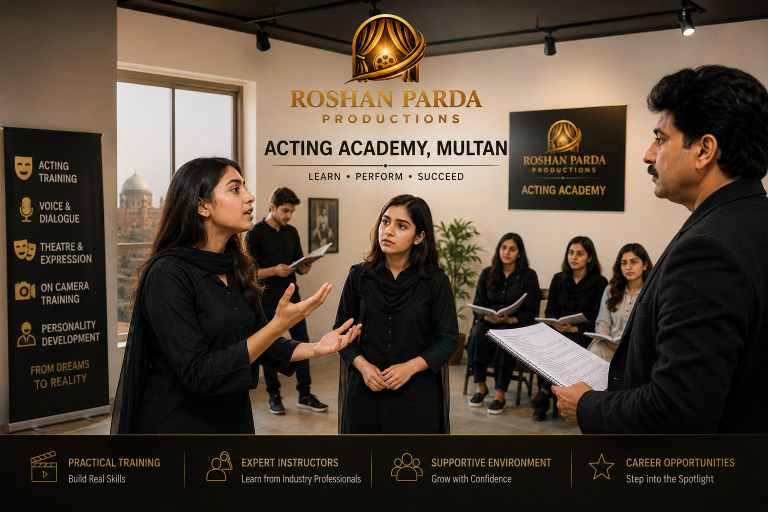
At Roshan Parda Productions’ Acting Academy, aspiring actors receive hands-on training focused on modern screen performance, including:
- Camera acting techniques
- Scene performance
- On-camera confidence
- Audition preparation
- Self-tape practice
- Character development
- Performance analysis
Whether you have years of theatre experience or are beginning your acting journey, structured camera training can help prepare you for today’s entertainment industry.
Learn more about our Acting Academy:
https://www.roshanparda.com/acting-academy-multan/
Ready to begin your transition from stage to screen?
Apply for upcoming acting programs:
https://www.roshanparda.com/join-acting-academy/
The Future Belongs to Versatile Actors
Today’s actors benefit from developing skills across multiple performance styles.
Theatre builds artistic discipline and confidence.
Screen acting develops technical precision and camera awareness.
Actors who master both disciplines are often better prepared for opportunities in television, film, streaming platforms, commercials, and digital media.
Rather than choosing between stage and screen, successful performers learn to excel in both.
Final Thoughts
Multan’s theatre community has produced talented performers for generations, and its artistic heritage remains an important part of Pakistan’s cultural landscape.
As the entertainment industry evolves, learning professional camera acting has become a valuable next step for actors who want to expand their careers into television, film, and digital productions.
With practical training, technical knowledge, and consistent practice, theatre actors can confidently transition from live performances to professional screen work.
Transition from stage to screen. Enroll in our specialized On-Camera Transition course and develop the skills needed to perform confidently in front of the camera.