Pakistani Dancers: Dance Talent, Performers & Emerging Artists in Pakistan

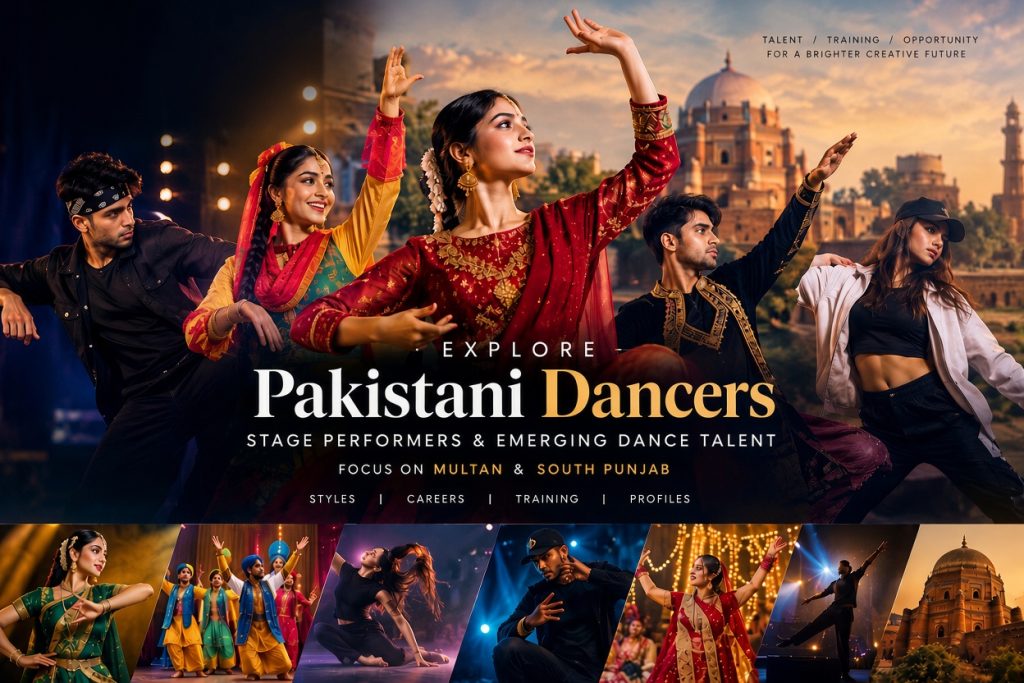
Ask anyone in Pakistan where they last saw dancing, and the answer is rarely a theatre. It is a mehndi night with cousins rehearsing in the courtyard, a Punjabi stage drama, a film song, or a phone recording that ends up in a family group chat. Dance runs through Pakistani social life, even though the people who practise it professionally have not always been given the respect the work deserves.
This guide looks at Pakistani dancers as artists and working performers. It covers the styles they train in, the settings they perform in, how careers begin, and what to look for in a teacher. Multan and South Punjab get particular attention, because the region has a strong stage-performance culture of its own that national coverage tends to overlook.
The Growing Dance & Performance Culture in Pakistan
Dance in Pakistan is older than any current debate about it. An AFP report published by Dawn’s Images section described dance as deeply embedded in Pakistani culture, in marriages, folk festivals and films, with choreography similar to that found in Bollywood. The same report was candid about the other side: many people frown on women dancing outside a family setting, and more so on performing for money. Any honest account of Pakistani dance has to hold both facts at once. dawndawn
What has changed is visibility. Wedding-film culture, regional music videos, television, stage shows and social media have given performers more places to be seen than a generation ago. Many now work across several of these at once. A dancer might perform at a mehndi function on Saturday, feature in a music-video shoot the next month, and post short choreography clips throughout.
Dancers are also adapting older forms to new settings. A dance scholar quoted in the AFP report described watching Pakistani classical dancers adapt traditional forms to a modern, local context as “unique and exciting.” It is a useful way to read the current scene: a mix of inherited technique and new performance spaces.
What Makes a Professional Dancer?
Talent is where dancing starts. It does not make someone a professional. In practice, professionalism in Pakistan’s performance world comes down to a handful of habits:
- Technical reliability. A professional can repeat choreography cleanly, hold timing under pressure, and stay in formation when the stage is crowded or the sound system is poor.
- Adaptability. Wedding floors, proscenium stages and film sets make different demands. Camera work rewards small, controlled expression. A large stage rewards projection.
- Preparation and conduct. Turning up on time, rehearsing properly, communicating clearly with organisers and respecting fellow performers matter as much as any single step.
- Presentation. Costume, grooming and a clear personal style help, but they support the dancing rather than replace it.
The dancer and the choreographer are related but different roles. A dancer performs movement. A choreographer designs it: the sequence, the spacing, the transitions, the way a routine fits a song and a venue. Many choreographers began as dancers, and many dancers choreograph informally, especially for weddings, but the skills are distinct.
Types of Dancers and Dance Performers in Pakistan
“Dancer” covers a wide range of working roles in Pakistan.
Stage dancers perform live for an audience, whether on a theatre stage, at a cultural programme or in a stage show. Live performance demands stamina, spatial awareness and the ability to read a room.
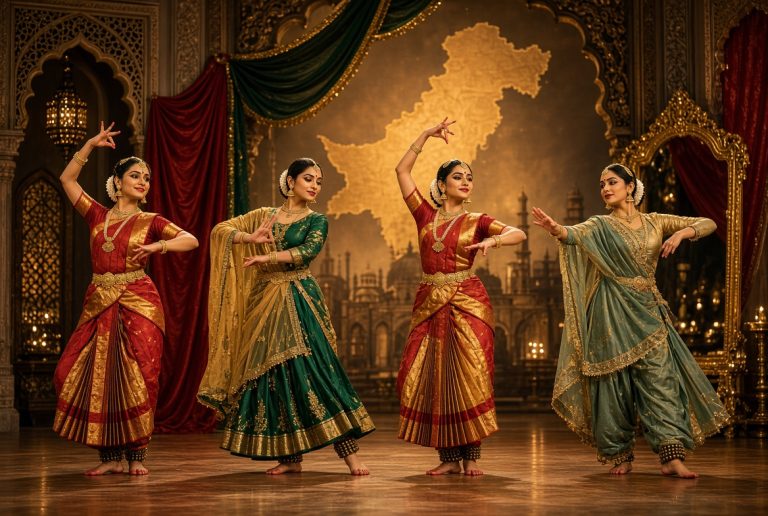
Classical dancers train in forms such as Kathak and Odissi, which rely on precise footwork, hand gestures, facial expression and rhythmic discipline. The AFP report profiled a Karachi-based Odissi dancer, which shows these forms are practised in Pakistan today despite limited institutional support.
Contemporary dancers work with fluid movement, emotion and modern choreography, often for stage and screen.
Bollywood-style dancers perform the energetic, expressive choreography associated with film songs. It is one of the most widely requested styles at celebrations across Pakistan.
Bhangra and Punjabi dancers carry forward high-energy folk traditions rooted in Punjab.
Hip-hop and freestyle dancers bring urban styles and improvisation, increasingly visible in digital content.
Wedding and event performers prepare choreography for mehndi, baraat and walima functions, either as hired performers or as coaches for families.
Film and music-video dancers work under directors and choreographers, where consistency across takes counts as much as talent.
Cultural and folk performers appear at festivals and regional events, preserving styles tied to particular communities.
Choreographers shape all of the above behind the scenes.
Pakistani dancers of every gender work across these categories, though public discussion tends to centre on women, who face the harshest scrutiny. The male dancers who have spoken publicly about their work, particularly in traditional forms, describe facing social stigma of their own.
Pakistani Dancers in Multan and South Punjab
Multan has a cultural identity that shapes how performance is made and received. The city is often called the City of Saints, is known for its Sufi shrines and blue pottery, and sits at the centre of the Saraiki-speaking belt. That regional identity shows up on stage. Local Punjabi and Saraiki stage drama, private events, wedding entertainment and photography-driven media all form part of the working landscape for dancers in Multan and the wider South Punjab region.
Performers here rarely have one job title. Roshan Parda’s published Multan profiles describe stage dancers who are also models, theatre artists or actresses. The profile of Sumbal Khan says she began performing at private events and weddings before moving into Punjabi and Saraiki stage drama, then film appearances and music-video work. That trajectory, from events to stage to screen, is a useful sketch of how regional careers often develop. Dance, modelling, acting and hosting overlap far more than they do in larger, more specialised industries.
For people looking for dance performers for events in Multan, this overlap matters. A performer with stage-drama experience may present differently from one trained mainly in wedding choreography, and both are valid. It is worth asking what kind of performance you need before choosing.
The same applies across South Punjab. Bahawalpur, Khanewal, Lodhran and nearby towns share language, music and wedding traditions with Multan, so demand for choreography and stage entertainment is not confined to one city. Lahore, Islamabad and Karachi have larger media industries and more formal training institutions, which is why many performers eventually work with people or productions beyond their home city. This article does not claim to describe those markets in depth, and no dancer’s location on this page implies availability elsewhere.
There are no reliable public figures on how large the regional dance-talent market is or how fast it is growing, so this guide offers none. What can be said is that the performance culture is visible, active and increasingly documented online.
Popular Dance Styles in Pakistan
Classical. Kathak, with roots in North Indian storytelling and court traditions, emphasises footwork, spins, hand gestures and expression, all tied to rhythmic cycles. Odissi and Bharatanatyam are also practised, though less commonly. Classical training builds posture, timing and discipline that carry over into every other style. Sheema Kermani, one of Pakistan’s best-known performers and teachers, has described how training across several classical forms gave her freedom as a choreographer rather than confining her.
Contemporary. A broad, modern style focused on body control, fluidity and emotional storytelling. It is popular for stage pieces and some film work.
Bollywood. Expressive, formation-heavy choreography drawn from film songs. Its appeal at celebrations is obvious: the songs are familiar and the steps are easy for groups to learn.
Hip-hop and freestyle. Grounded in rhythm and musicality, with freestyle rewarding improvisation. These styles are common in digital content and among younger dancers.
Bhangra. A Punjabi folk dance associated historically with harvest celebrations and now a fixture of weddings, festivals and stage events. It is energetic, communal and instantly recognisable.
Punjabi and regional folk dance. Beyond Bhangra, Punjab and the Saraiki belt have other circle and group dances, such as Jhumar and Luddi, though performers and regions describe and practise them differently.
Wedding choreography. Not a style so much as a format: short, rehearsed routines built around a specific song, a specific family and a specific stage. It draws on Bollywood, Bhangra and freestyle in whatever mix suits the group.
How to Start a Career as a Dancer in Pakistan
There is no single licensed route, so careers are usually built in stages. The steps below are a practical order of work, not a guarantee of outcomes.
- Learn fundamentals. Posture, weight transfer, counting beats and basic footwork. Skipping this is the most common reason dancers plateau.
- Develop rhythm and body control. Practise isolating movements, holding balance and staying on the beat without relying on the lyrics.
- Practise consistently. Short, regular sessions beat occasional long ones. Record yourself and watch it back honestly.
- Learn more than one style. Versatility makes you employable for stage, weddings and screen work alike. Even a working knowledge of Bhangra and Bollywood widens the options.
- Build performance confidence. Perform for small audiences first: family events, school programmes, academy showcases. Nerves shrink with repetition.
- Create a professional portfolio. A short introduction, your styles, your experience and a few clean photographs. Keep claims factual; organisers value accuracy over hype.
- Record good performance videos. Steady framing, decent light and clear audio, with clips that show range. Two or three strong videos beat twenty weak ones.
- Develop stage presence. Eye line, spacing, expression and the ability to recover from mistakes without stopping.
- Network professionally. Choreographers, photographers, event organisers, theatre companies and production houses are how most work travels. Be reliable and polite; reputation moves faster than any advert.
- Understand auditions and opportunities. Learn how casting calls work, what a call sheet is, and what an organiser expects at rehearsal. Understand what you are being paid for and agree it in writing where possible.
Opportunities are never guaranteed, and anyone who promises otherwise should be treated cautiously.
Dancers for Weddings, Events, Stage Shows & Productions
Different settings ask for different things.
- Weddings and mehndi events. Group choreography, family performances and sometimes a solo or duo segment. Clear communication about song choice, duration and stage space prevents most problems.
- Cultural events and festivals. Often folk or classical material, sometimes with formal programming.
- Stage shows. Dance numbers within a larger programme, or full dance-led shows. Rehearsal time and stage plots matter.
- Film and drama. Dancers work to a director’s vision, repeating takes and matching continuity. Patience and consistency are prized.
- Music videos. Short, intensive shoots with choreography prepared in advance.
- Branded and digital content. Short-form video, promotional shoots and campaign content, where personality and camera awareness count alongside technique.
- Live performances more broadly. Corporate functions, launches and entertainment programmes.
None of these settings guarantees regular work, and rates and availability vary widely. Treat every booking as a professional agreement: confirm date, duration, venue, costume expectations and payment terms in advance.
How Roshan Parda Supports Dance & Entertainment Talent
Roshan Parda Productions describes itself as a film, talent, production, events and media company based in Pakistan. It brings together film production, acting academy programmes, modelling guidance, event production and media services. It also runs a directory of performers, Our Talent, which is where the dancer profiles below live.
Dance connects to the rest of that ecosystem in practical ways. The company’s Dance Academy is a corporate division that links dance education to production and performance settings, while the Acting Academy and modelling guidance cover camera confidence and portfolio readiness, skills many dancers also need. The company’s film production and services pages describe the production side, including events and branded media.
The dancer profiles are reference pages rather than guarantees. Each profile carries a “Hire for your Event / Function” link that opens a WhatsApp chat, so organisers can enquire about a performer directly. Availability, rates and terms are agreed between the parties.
Meet Pakistani Dancers Featured on Roshan Parda
The Dancer collection currently includes the profiles below. The descriptions here are brief summaries of what each profile states; open the profile for the full detail and photographs.
Silak Khan is a theatre artist and stage dancer from Multan. Her profile describes work that spans stage drama and dance performance, with a traditional visual style.
Sumbal Khan is a stage actress and dancer from Multan. Her profile says she has been active since around 2010, began at private events and weddings, and moved into Punjabi and Saraiki stage drama, film appearances and music-video work.
Palwasha Multani is listed as a stage dancer and model from Multan.
Mano Mehak is listed as a stage dancer and model from Multan.
Nargis Pari is a stage dancer and model based in Multan.
Misbah Malik is a stage dancer and model from Multan, showcased on Roshan Parda.
Meerab Shah is a stage dancer and model from Multan.
Hira Multani is a professional stage dancer and model based in Multan.
Anmol Multani is a professional dancer and model featured on the platform.
Anita Multani is a professional dancer and model featured on the platform.
Eman Shah is a professional dancer and model featured on the platform.
Afreen Bhatti is a professional dancer and model, with a profile covering her dance career, modelling work and photographs.
Being listed on a directory is not an endorsement or ranking, and no profile here should be read as one. The collection grows over time, so the full Dancer archive is the most current place to browse.
Where to Learn Dance in Multan
For those who want to train rather than hire, Roshan Parda Dance Academy is a dance academy in Multan that describes itself as suitable for students, beginners, aspiring dancers and performers. Its published page lists these groups:
- complete beginners, and students who want to learn from the basics
- aspiring dancers and models or performers who want better stage movement
- brides, grooms and families preparing wedding or mehndi performances
- children and teenagers
- girls and women seeking a respectful training environment
- dancers preparing for competitions, auditions or stage shows
- content creators and presenters who want choreography and movement training
The page lists classical, contemporary, Bollywood, hip-hop and freestyle, and Bhangra/Punjabi dance, along with wedding and event choreography and stage-presence training. It also states plainly that admission does not guarantee bookings, paid work, fame or employment, which is the right expectation to bring to any dance course.
For specifics such as class timings, batches, requirements and admission, the academy directs enquiries to its team. You can start with the Join Dance Academy page or the contact page.
How to Choose a Dance Training Program
Whether you are looking at dance classes in Multan or anywhere else, a few questions separate a useful programme from a disappointing one.
Instructor experience. Ask who teaches, what they have performed or choreographed, and whether they teach beginners regularly.
Teaching approach. Good teaching breaks steps down, corrects gently and explains why. Watch a class if you can.
Styles offered. Match the programme to your goal. A bride preparing a mehndi routine needs something different from a student aiming at classical fundamentals.
Practice environment. Floor, mirrors, sound, ventilation and space affect both learning and safety.
Performance opportunities. Showcases and small internal performances help, but be wary of any promise of guaranteed stage work.
Schedule. Regular, predictable sessions suit most learners. Check how make-up classes work.
Transparency. Fees, duration, batch size and expectations should be clear before you commit.
Safety and respect. This matters especially for young learners and for women. Ask how the environment is supervised and how conduct is handled.
Student goals. A good programme asks what you want and adjusts, rather than offering one format for everyone.
Portfolio development. If your goal is professional, ask whether training helps with performance videos, photographs and presentation.
Frequently Asked Questions About Pakistani Dancers
Who are Pakistani dancers?
Pakistani dancers are performers who work in classical, folk, contemporary, Bollywood-influenced and other styles across stage, weddings, film, television and digital media. They range from trained classical artists to wedding performers and emerging talent.
Where can I find dancers in Multan?
Start with a curated directory such as the Dancer collection on Roshan Parda, which lists Multan-linked stage dancers with individual profiles. You can also ask local event organisers, photographers and stage-drama companies for recommendations.
What types of dance are popular in Pakistan?
Bollywood-style choreography, Bhangra and Punjabi folk dance, classical forms like Kathak, and modern styles such as hip-hop and freestyle are all widely seen. Wedding choreography usually mixes several.
How can I become a professional dancer in Pakistan?
Build fundamentals, learn several styles, perform regularly, create a portfolio with good video, and network with choreographers and organisers. Progress is gradual and opportunities cannot be guaranteed.
Are there dance classes in Multan?
Yes. Roshan Parda Dance Academy is one option and lists several styles on its page. Contact the academy for current timings, batches and admission details.
Can beginners learn dance?
Yes. Many academies, including the one above, accept complete beginners. Interest, discipline and regular practice matter more than prior experience.
What is the difference between a dancer and a choreographer?
A dancer performs movement; a choreographer designs the sequence, spacing and structure. Many people do both, but they are different skills.
Can dancers work in films and music videos?
Some do, usually as part of a larger production and under a choreographer or director. Work depends on casting, experience and availability. Some profiles on Roshan Parda list film and music-video credits, but no path is guaranteed.
Can dancers perform at weddings and events?
Yes. Weddings, mehndi functions and cultural events are among the most common settings for dance performance in Pakistan. Confirm details such as timing, songs and payment in advance.
How can I build a dancer portfolio?
Prepare a short profile, a few clear photographs and two or three good performance videos showing different styles. Keep everything factual and update it as you gain experience.
What skills should a stage dancer develop?
Rhythm, technique, stamina, spatial awareness, expression, and the ability to recover smoothly from mistakes. Stage dancers also benefit from rehearsal discipline and clear communication.
How can I discover Pakistani dance talent?
Browse curated collections, watch performance videos, and speak to organisers who have worked with performers. Directories such as Roshan Parda’s talent section are one starting point.
Explore Further
If you are looking for performers, start with the Pakistani dancers collection and open the profiles that interest you. If you want to train, read the Dance Academy page and get in touch through the contact page for admission details. Enquiries do not guarantee bookings, auditions or employment; they are simply the first step in a conversation.