How to Start a Dance Academy Franchise or Branch in Pakistan

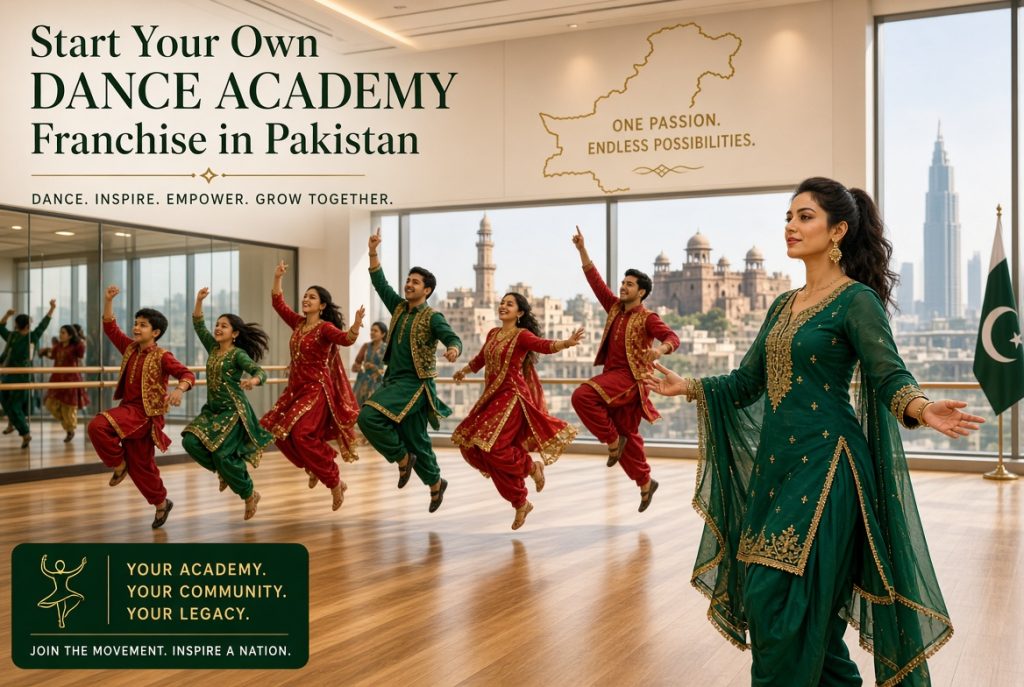
Pakistan’s creative economy is waking up. With one of the world’s largest youth populations, rising middle-class income, and a cultural shift that no longer treats dance as taboo, the dance academy business Pakistan opportunity has never been stronger. Cities beyond the traditional cultural hubs are hungry for structured, professional training in Bollywood, bhangra, contemporary, hip-hop, classical forms, and fitness-oriented dance.
This is not just a local Multan story. It is a national expansion play. Roshan Parda Dance Academy Multan has already demonstrated what disciplined training, professional standards, and community trust can achieve in South Punjab. That same operating model—safe environments, industry-aligned curriculum, and talent pipelines—is now positioned for franchise and branch growth into Lahore, Karachi, Islamabad, Faisalabad, and secondary cities.
Market Demand: Why Dance Academies Are Ready to Scale Across Pakistan
Pakistan’s demographic reality is the strongest driver. Roughly two-thirds of the population is under 30. Urban youth and young professionals increasingly seek physical activity that feels social, expressive, and culturally relevant rather than purely gym-based. Bhangra streams have surged dramatically, Bollywood and fusion styles dominate wedding and social media content, and fitness dance formats attract both genders and multiple age groups.
Demand is no longer limited to elite pockets of Lahore or Karachi. Parents in Multan, Faisalabad, and smaller cities want structured extracurriculars that build confidence, discipline, and performance skills. Women and girls are enrolling in greater numbers when the environment is professional and safe. Brands and production houses need camera-ready talent who can move well. The result is a clear gap: high demand, limited professional supply outside the biggest metros.
A well-run dance academy captures multiple revenue streams—group classes, private coaching, workshop intensives, recital tickets, costume and merchandise sales, corporate or wedding choreography, and talent placement into productions or events.
What a Successful Dance Academy Needs
Four pillars separate thriving academies from those that struggle.
1. Space
Prime locations near residential colonies, schools, or commercial hubs matter more than sheer size. A functional studio typically needs 800–2,500 sq ft with quality flooring, mirrors, sound system, changing rooms, and basic reception. Safety, ventilation, and accessibility for female students and parents are non-negotiable in the Pakistani context.
2. Instructors
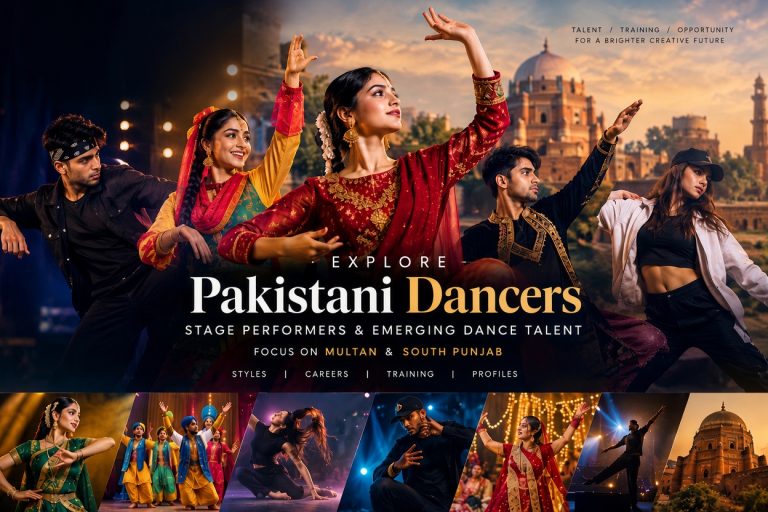
Talent is the product. Successful academies hire or train instructors who combine technical skill with the ability to teach mixed-ability groups and maintain professional boundaries. Continuous development and clear codes of conduct create differentiation. You can already see the quality of trained dancers associated with Roshan Parda here.
3. Curriculum
A structured, progressive syllabus is essential. Core offerings should include age-banded classes (kids, teens, adults), beginner-to-advanced pathways in popular styles (Bollywood, bhangra, hip-hop, contemporary, classical/semi-classical), and specialized tracks such as wedding choreography or performance preparation. Regular showcases and progression certificates increase retention.
4. Marketing & Operations
Local digital presence (Instagram Reels of classes and student transformations, Google Business Profile, WhatsApp inquiry systems) outperforms traditional advertising. Community partnerships with schools, event planners, and production houses create steady student flow. Franchise systems succeed when they standardize branding, pricing guidance, instructor training, and operational playbooks while allowing local market adaptation.
Roshan Parda’s Growth Story as Proof of Concept
Roshan Parda’s Dance Academy in Multan has built credibility by delivering industry-standard training, creating a safe professional environment (especially valued by female students and families), and connecting trained talent to real commercial and creative work. Students from surrounding cities already travel to Multan for quality instruction—evidence of unmet demand in the wider region.
That operational DNA—professional standards, talent pipeline thinking, and community trust—transfers directly across Pakistan. Expanding into structured dance programming through franchises or new branches positions the brand as a full performing-arts destination.
The Multan base proves the model works outside the traditional big-three cities. Franchise or branch partners in Lahore, Karachi, Islamabad, or Faisalabad gain an established brand, proven systems, and a ready talent network instead of starting from zero.
Practical Path to Opening a Franchise or Branch
- Validate local demand — Map competition, school density, and middle-class residential pockets.
- Secure suitable space — Prioritize accessibility, safety, and visibility.
- Build or access curriculum and training — Partner with an established operator such as Roshan Parda for ready-made systems.
- Hire and train instructors — Emphasize both technique and professional conduct.
- Launch with focused marketing — Trial classes, social proof content, and local partnerships.
- Measure and refine — Track utilization, retention, and ancillary revenue from day one.
Franchise models reduce risk by providing branding, operations manuals, marketing templates, and ongoing support.
The Opportunity Ahead
Pakistan does not lack talent or enthusiasm for dance. It lacks professional, scalable, trusted platforms that turn interest into consistent skill and opportunity. The dance academy business Pakistan market is still early. Early movers who combine cultural relevance, operational discipline, and genuine care for student experience will define the category.
Roshan Parda’s Multan foundation demonstrates that high-quality dance training can thrive beyond the traditional centers. For entrepreneurs, investors, or educators in Lahore, Karachi, Islamabad, Faisalabad, and secondary cities who share the same standards, partnership or franchise conversations are the logical next step.
Ready to explore a Roshan Parda franchise or branch opportunity?
Learn more about the academy: Dance Academy Multan
Join the Dance Academy: Join Dance Academy in Multan
View our dancers: All Dancers