Screen Acting vs Theatre Acting: What’s the Difference?

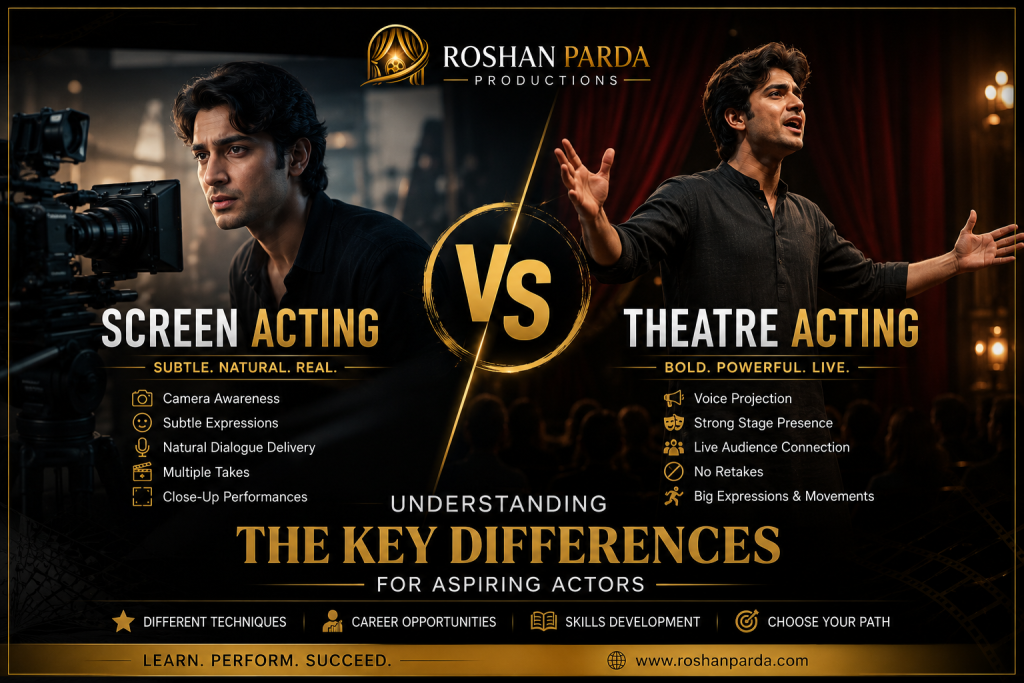
One of the most common questions aspiring performers ask is, “What is the difference between screen acting and theatre acting?” Although both disciplines revolve around storytelling and character portrayal, they require different techniques, skills, and approaches.
Whether you dream of becoming a film star, television actor, or stage performer, understanding these differences can help you choose the right training and career path.
What Is Screen Acting?
Screen acting refers to performances created for films, television dramas, web series, commercials, and digital content. Since cameras capture every detail, screen actors rely on subtle expressions, natural dialogue delivery, and emotional authenticity.
Characteristics of Screen Acting
- Natural and realistic performances
- Close-up facial expressions
- Camera awareness and positioning
- Multiple takes and scene repetition
- Voice control rather than projection
- Continuity between scenes
- Collaboration with camera crews and directors
Screen acting is commonly used in:
- Films
- Television dramas
- Web series
- Advertisements
- Streaming platforms
- YouTube productions
What Is Theatre Acting?
Theatre acting is performed live in front of an audience. Stage actors must project their voice, use larger physical movements, and maintain character continuity throughout an entire performance.
Characteristics of Theatre Acting
- Strong voice projection
- Larger body language
- Live audience interaction
- Continuous performances without retakes
- Physical stamina and endurance
- Strong memorization skills
- Greater stage presence
Theatre acting is commonly found in:
- Stage plays
- Musicals
- Live performances
- Cultural productions
- Educational theater
Screen Acting vs Theatre Acting: Major Differences
| Feature | Screen Acting | Theatre Acting |
|---|---|---|
| Audience | Camera | Live Audience |
| Performance Style | Subtle and Natural | Larger and Expressive |
| Voice | Controlled and Conversational | Projected and Powerful |
| Retakes | Multiple Takes | No Retakes |
| Facial Expressions | Detailed Close-Ups | Broad Expressions |
| Scene Order | Often Non-Sequential | Performed in Sequence |
| Environment | Film Sets | Stage |
| Camera Awareness | Essential | Not Required |
| Physical Movement | Minimal and Controlled | Bigger Movements |
| Performance Duration | Short Scenes | Entire Performance |
Which Acting Style Is More Difficult?
Neither style is inherently easier or harder. Each presents unique challenges.
Challenges of Screen Acting
- Maintaining emotional continuity
- Performing naturally under close-up cameras
- Adapting to multiple takes
- Working with technical requirements
Challenges of Theatre Acting
- Sustaining energy throughout long performances
- Delivering without mistakes
- Projecting emotions to large audiences
- Maintaining live stage presence
Can Theatre Actors Transition to Screen Acting?
Yes. Many successful film and television actors began their careers in theater. Theatre training often develops discipline, voice control, and character development, which can be valuable for screen performances.
However, screen acting requires actors to adapt their performance style to suit cameras and close-up shots.
Which Is Better for Beginners?
The answer depends on your goals.
Choose Screen Acting If:
- You want to work in films and television.
- You enjoy natural performances.
- You are interested in digital media and web series.
- You want experience in front of cameras.
Choose Theatre Acting If:
- You enjoy live performances.
- You want to strengthen voice and stage presence.
- You appreciate traditional performing arts.
- You thrive on audience interaction.
Why Modern Actors Should Learn Both
Professional actors often benefit from understanding both screen acting and theatre acting. Combining the discipline of stage performances with the subtlety required for film and television creates more versatile performers.
Learning both forms can improve:
- Character development
- Emotional expression
- Voice control
- Body language
- Confidence
- Adaptability
- Audition performance
How Roshan Parda Productions Helps Aspiring Actors
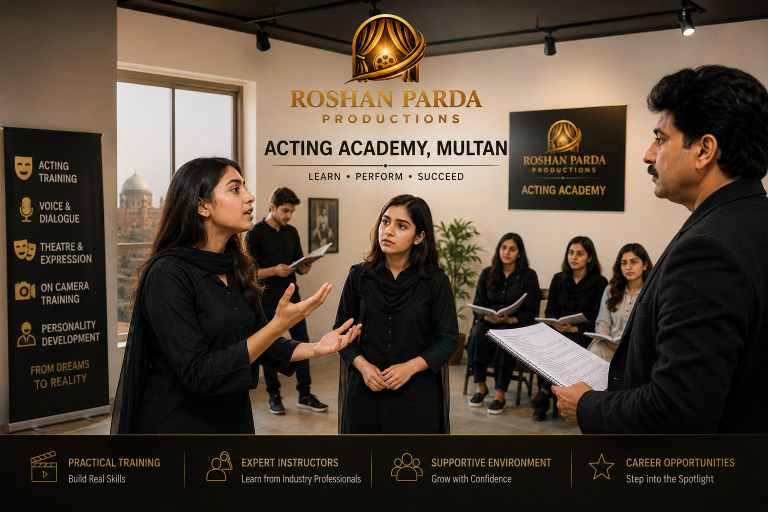
Roshan Parda Productions is an emerging acting academy and film production company based in Multan, Pakistan. Through practical training and creative collaboration, students can develop:
- Camera Acting Techniques
- Dialogue Delivery
- Character Development
- Emotional Expression
- Confidence Building
- Audition Preparation
- Portfolio and Showreel Development
By combining acting education with filmmaking, aspiring actors gain valuable experience that prepares them for screen performances and creative opportunities.
Frequently Asked Questions
Is screen acting easier than theatre acting?
Not necessarily. Screen acting requires subtle performances and camera awareness, while theatre acting demands strong stage presence and continuous live performances.
Can theatre actors become film actors?
Yes. Many successful actors transition from theatre to film and television by adapting their acting techniques.
Which acting style pays more?
Income depends on opportunities, experience, and the market. Film and television projects may offer larger budgets, but professional theatre can also provide rewarding careers.
Should actors learn both screen and theatre acting?
Yes. Understanding both styles helps actors become versatile performers and increases career opportunities.
Final Thoughts
Screen acting and theatre acting are two powerful forms of storytelling. While one captures emotion through the camera lens and the other connects with audiences through live performances, both require dedication, training, and creativity.
Whether your dream is to appear in films, television dramas, or stage productions, mastering the fundamentals of acting and continuously developing your skills can help turn passion into a successful career.